Showing posts with label Liberation Theology. Show all posts
Showing posts with label Liberation Theology. Show all posts
Tuesday, 14 April 2015
Sunday, 2 February 2014
Saturday, 10 August 2013
Wednesday, 22 May 2013
Tuesday, 22 January 2013
Saturday, 5 January 2013
Saturday, 1 September 2012
Barney Pityana's Sermon at the Marikana Massacre Memorial Service in Grahamstown
Marikana Memorial Service: Praying for a Just Peace
Presider: Bishop Ebenezer Ntali
Preacher: Prof. Barney Pityana
The Cathedral of St. Michael & St. George, Grahamstown 30 August 2012


Wednesday, 29 August 2012
Bishop Rubin Philip's Sermon at the Marikana Massacre Memorial Service
 |
| Bishop Rubin Philip |
Friday, 24th August 2012, Emmanuel Cathedral, Durban
And so,
again, the truth of our country is in dead black bodies littering the
ground. Once again, the truth of our time is that people asserting
their rights and dignity against systemic injustice have been brought
down in a hail of bullets. Has nothing changed in our place, when its
truth remains that the armed might of the state acts for the elite of
powerful and wealthy, and against our people? No self-righteous
declarations of 'tragedy'; no insisting on 'complexity'; no
obfuscatory 'commissions of enquiry'; are enough to hide that truth.
The truth is plain to masses of the people of South Africa, it is an
affront to God.
Wednesday, 15 August 2012
Archbishop Romero's Pastoral Letters
The Archbishop Romero Trust
These letters are written by a bishop to his people and, as their title suggests, their nature is primarily pastoral. They are, however, works of great theological importance and situate Archbishop Romero amongst the great teaching bishops of the Church.
The first four letters below come from his time as Archbishop of San Salvador - these are his best known pastoral letters and they are published in English under the title Voice of the Voiceless by Orbis Books.
The fifth letter has only recently come to light. It is from an earlier period of his ministry when he was Bishop of Santiago de Maria - readers will note the difference in style and content - we include this letter below for the sake of completeness.
Tuesday, 17 July 2012
Friday, 13 July 2012
In the Parish of the Poor: Writings from Haiti by Jean-Bertrand Aristide

 .
.
An
astonishingly brave and brutal, tender and undeniably truthful
account of (relatively modern day) Haiti, this book is an altogether
heartbreaking account of the country’s past events, which place its
recent events into even more painful perspective.
Wednesday, 11 January 2012
James Cone’s Gospel of the Penniless, Jobless, Marginalized and Despised
by Chris Hedges, TruthDig
“The Cross and the Lynching Tree are separated by nearly two thousand years,” James Cone writes in his new book, “The Cross and the Lynching Tree.” “One is the universal symbol of the Christian faith; the other is the quintessential symbol of black oppression in America. Though both are symbols of death, one represents a message of hope and salvation, while the other signifies the negation of that message by white supremacy. Despite the obvious similarities between Jesus’ death on the cross and the death of thousands of black men and women strung up to die on a lamppost or tree, relatively few people, apart from the black poets, novelists, and other reality-seeing artists, have explored the symbolic connections. Yet, I believe this is the challenge we must face. What is at stake is the credibility and the promise of the Christian gospel and the hope that we may heal the wounds of racial violence that continue to divide our churches and our society.”
“The Cross and the Lynching Tree are separated by nearly two thousand years,” James Cone writes in his new book, “The Cross and the Lynching Tree.” “One is the universal symbol of the Christian faith; the other is the quintessential symbol of black oppression in America. Though both are symbols of death, one represents a message of hope and salvation, while the other signifies the negation of that message by white supremacy. Despite the obvious similarities between Jesus’ death on the cross and the death of thousands of black men and women strung up to die on a lamppost or tree, relatively few people, apart from the black poets, novelists, and other reality-seeing artists, have explored the symbolic connections. Yet, I believe this is the challenge we must face. What is at stake is the credibility and the promise of the Christian gospel and the hope that we may heal the wounds of racial violence that continue to divide our churches and our society.”
Tuesday, 29 November 2011
Re-imagining South Africa: Black Consciousness, radical Christianity and the New Left, 1967 – 1977
by Ian Macqueen, PhD Thesis, 2011
This thesis places Black Consciousness in comparative perspective with progressive politics in South Africa in the late 1960s and the 1970s. It argues that the dominant scholarly focus on Black Consciousness, which is passed over as a ‘stage’ in the Black struggle against white supremacy, insufficiently historicises the deeper roots, and the wider resonances and ideological contestations of the Black Consciousness movement. As they refined their political discourse, Black Consciousness activists negotiated their way through the progressive ideologies that flourished as part of the wider political and social ferment of the 1960s. Although Black Consciousness won over an influential minority of radical Christians, a more contested struggle took place with nascent feminism on university campuses and within the Movement; as well as with a New Left-inspired historical and political critique that gained influence among white activists.
This thesis places Black Consciousness in comparative perspective with progressive politics in South Africa in the late 1960s and the 1970s. It argues that the dominant scholarly focus on Black Consciousness, which is passed over as a ‘stage’ in the Black struggle against white supremacy, insufficiently historicises the deeper roots, and the wider resonances and ideological contestations of the Black Consciousness movement. As they refined their political discourse, Black Consciousness activists negotiated their way through the progressive ideologies that flourished as part of the wider political and social ferment of the 1960s. Although Black Consciousness won over an influential minority of radical Christians, a more contested struggle took place with nascent feminism on university campuses and within the Movement; as well as with a New Left-inspired historical and political critique that gained influence among white activists.
Tuesday, 8 November 2011
Gustavo Gutierrez and the preferential option for the poor
by John Dear, National Catholic Reporter
"I hope my life tries to give testimony to the message of the Gospel, above all that God loves the world and loves those who are poorest within it."
That's the recent summation of his life by 83-year-old Peruvian theologian Gustavo Gutierrez, founder of liberation theology and its central tenet, "the preferential option for the poor." These days, Gutierrez works and writes at Notre Dame, where his colleague, my friend Fr. Daniel Groody, has just completed an excellent anthology of his work: Gustavo Gutierrez: Spiritual Writings (Orbis Books, 2011). Gutierrez reminds us of God's preferential love for the poor and our own need to side with the poor and oppressed everywhere in their struggle for justice.
"I hope my life tries to give testimony to the message of the Gospel, above all that God loves the world and loves those who are poorest within it."
That's the recent summation of his life by 83-year-old Peruvian theologian Gustavo Gutierrez, founder of liberation theology and its central tenet, "the preferential option for the poor." These days, Gutierrez works and writes at Notre Dame, where his colleague, my friend Fr. Daniel Groody, has just completed an excellent anthology of his work: Gustavo Gutierrez: Spiritual Writings (Orbis Books, 2011). Gutierrez reminds us of God's preferential love for the poor and our own need to side with the poor and oppressed everywhere in their struggle for justice.
Sunday, 14 August 2011
Letter from a Birmingham Jail
by the Rev. Martin Luther King, Jr, History is a Weapon
April 16, 1963
MY DEAR FELLOW CLERGYMEN:
While confined here in the Birmingham city jail, I came across your recent statement calling my present activities "unwise and untimely." Seldom do I pause to answer criticism of my work and ideas. If I sought to answer all the criticisms that cross my desk, my secretaries would have little time for anything other than such correspondence in the course of the day, and I would have no time for constructive work. But since I feel that you are men of genuine good will and that your criticisms are sincerely set forth, I want to try to answer your statements in what I hope will be patient and reasonable terms.
April 16, 1963
MY DEAR FELLOW CLERGYMEN:
While confined here in the Birmingham city jail, I came across your recent statement calling my present activities "unwise and untimely." Seldom do I pause to answer criticism of my work and ideas. If I sought to answer all the criticisms that cross my desk, my secretaries would have little time for anything other than such correspondence in the course of the day, and I would have no time for constructive work. But since I feel that you are men of genuine good will and that your criticisms are sincerely set forth, I want to try to answer your statements in what I hope will be patient and reasonable terms.
Friday, 12 August 2011
Remembering the Poor: An Interview with Gustavo Gutiérrez
by Daniel Hartnett, America Magazine, 2003
Each year the prestigious American Academy of Arts and Sciences announces the incorporation of new members. This year’s list of honorary fellows includes the world-renowned Peruvian theologian Gustavo Gutiérrez, O.P., who is best known for his book "A Theology of Liberation" (Span. 1971, Eng. 1973).
Father Gutiérrez has written over a dozen books and hundreds of articles concerning the church’s role in creating social structures of solidarity. Perhaps more than anyone else, he has been instrumental in helping the Christian community to read and live the Gospel from the perspective of the poor.
Each year the prestigious American Academy of Arts and Sciences announces the incorporation of new members. This year’s list of honorary fellows includes the world-renowned Peruvian theologian Gustavo Gutiérrez, O.P., who is best known for his book "A Theology of Liberation" (Span. 1971, Eng. 1973).
Father Gutiérrez has written over a dozen books and hundreds of articles concerning the church’s role in creating social structures of solidarity. Perhaps more than anyone else, he has been instrumental in helping the Christian community to read and live the Gospel from the perspective of the poor.
Tuesday, 9 August 2011
Eyes of the Heart: Seeking A Path For the Poor in the Age of Globalization
 |
| Eyes of the Heart |
"Wherever women are heard and respected, the face of God is illuminated. Wherever the poor are heard and respected, the face of God is illuminated". - Jean-Bertrand Aristide, Eyes of the Heart
Sunday, 7 August 2011
Monday, 1 August 2011
The World Turned Upside Down: Radical Ideas During the English Revolution

James Come & Black Liberation Theology in the US
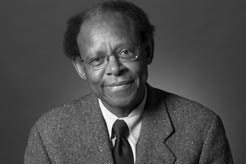 |
| James Cone |
“Black churches are very powerful forces in the African American community and always have been. Because religion has been that one place where you have an imagination that no one can control. And so, as long as you know that you are a human being and nobody can take that away from you, then God is that reality in your life that enables you to know that.”
Subscribe to:
Posts (Atom)