Showing posts with label capitalism. Show all posts

Thursday, 27 October 2016

To Remake the World: Slavery, Racial Capitalism, and Justice

by Walter Johnson, The Boston Review

In Memory of Cedric Robinson (1940–2016)

It is a commonplace to say that slavery “dehumanized” enslaved people, but to do so is misleading, harmful, and worth resisting.

I hasten to add that there are, of course, plenty of right-minded reasons for adopting the notion of “dehumanization.” It is hard to square the idea of millions of people being bought and sold, of systematic sexual violation, natal alienation, forced labor, and starvation with any sort of “humane” behavior: these are the sorts of things that should never be done to human beings. By terming these actions “inhuman” and suggesting that they either relied upon or accomplished the “dehumanization” of enslaved people, however, we are participating in a sort of ideological exchange that is no less baleful for being so familiar. We are separating a normative and aspirational notion of humanity from the sorts of exploitation and violence that history suggests may well be definitive of human beings: we are separating ourselves from our own histories of perpetration. To say so is not to suggest that there is no difference between the past and the present; it is merely that we should not overwrite the complex determinations of history with simple-minded notions of moral progress.

Wednesday, 15 June 2016

The Racist Dawn of Capitalism


By Peter James Hudson, The Boston Review

A decade before his assassination at the hands of a nationalist in 1914, French socialist Jean Jaurès completed a historical work that radically changed the study of the French Revolution. Where others had focused on disputes over politics and political ideology, Jaurès’s four-volume Histoire socialiste de la Révolution française took as its subject the transformations wrought by an emergent capitalism, foregrounding irruptions within the French economy. Through a Marxist lens, Jaurès emphasized the conflict between the ancien régime and the newly empowered bourgeoisie and excavated from the archives of the revolution the struggles of French workers and peasants.

Wednesday, 20 May 2015

Critical Thought against the Capitalist Hydra

John Holloway, ROAR Magazine

An honor, a joy to be here. I feel I want to dance, but I won’t do it, I’ll focus instead on what we were asked to do. I shall talk about critical thought and explain how to kill the hydra of capitalism. That’s what it’s about: we talk of the hydra not to frighten ourselves, but to think about how to defeat it. The myth of the hydra had a happy end and we too must reach a happy end.

Sunday, 14 December 2014

Slavery and Capitalism


Few topics have animated today’s chattering classes more than capitalism. In the wake of the global economic crisis, the discussion has spanned political boundaries, with conservative newspapers in Britain and Germany running stories on the "future of capitalism" (as if that were in doubt) and Korean Marxists analyzing its allegedly self-destructive tendencies. Pope Francis has made capitalism a central theme of his papacy, while the French economist Thomas Piketty attained rock-star status with a 700-page book full of tables and statistics and the succinct but decisively unsexy title Capital in the Twenty-First Century (Harvard University Press).

Saturday, 13 September 2014

Footnotes on the off-shore city

Achille Mbembe, Johannesburg Workshop in Theory & Criticism
 
At the start of the 21st century, we witness a renewed interest in the idea of the African future. Gradually, older senses of time and space based on linear notions of development and progress are being replaced by newer senses of time founded on liquidity and flows. Africa's future is increasingly thought of as open, full of possibility and potentiality, even as pliant. This new cultural and political sense of time is constructed in a number of registers, from the economic to the fictional. It acknowledges that things are complex. And yet, in its emphasis on un-actualized possibilities and would-be worlds, it also relies on open narrative models. Critical in this regard is the study of emergent orders, forms of self-organization, small ruptures, "tipping points" that may lead to deep alterations of the direction the Continent takes.

Monday, 24 September 2012

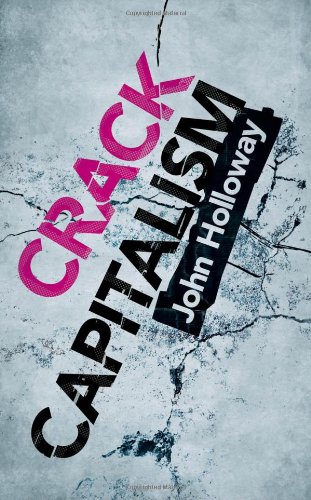
Crack Capitalism by John Holloway


Crack Capitalism, argues that radical change can only come about through the creation, expansion and multiplication of 'cracks' in the capitalist system. These cracks are ordinary moments or spaces of rebellion in which we assert a different type of doing.

John Holloway's previous book, Change the World Without Taking Power, sparked a world-wide debate among activists and scholars about the most effective methods of going beyond capitalism. Now Holloway rejects the idea of a disconnected array of struggles and finds a unifying contradiction - the opposition between the capitalist labour we undertake in our jobs and the drive towards doing what we consider necessary or desirable.

Clearly and accessibly presented in the form of 33 theses, Crack Capitalism is set to reopen the debate among radical scholars and activists seeking to break capitalism now.

Saturday, 28 July 2012

The state, private sector and market failures: A response to Prof Joseph Stiglitz

by Mahmood Mamdani, Pambazuka

Your Excellency, Mr. President; the Chair, the Honorable Minister of Finance; the Honorable Governor of the Bank of Uganda and the Honorable Deputy Governor, Bank of Uganda,

I assume that the Bank of Uganda has asked me to be a discussant hoping I would raise questions they do not feel comfortable raising. I will take a cue from them and ask Professor Stiglitz questions hoping he will give responses that I do not quite feel comfortable giving.

Wednesday, 20 June 2012

Rodney and the concept of labour

by George Lamming, The Stabroek News

Pambazuka Press has recently published a new edition of Walter Rodney’s seminal book, How Europe Underdeveloped Africa. To commemorate the reissue, 40 years after its initial publication, and the 32nd anniversary of Walter Rodney’s assassination, a panel discussion was held at the Cipriani Labour College, Trinidad and Tobago, on June 13, 2012. This week we carry the text of Barbadian novelist George Lamming’s address.

Sunday, 8 April 2012

Capitalism, Marxism & the Black Radical Tradition: An interview with Cedric Robinson

The Brotherwise Dispatch, Vol.2, No. 1, February 2010

It is the task of the radical critic to illuminate what is repressed and excluded by the basic mechanisms of a given social order. It is the task of the politically engaged radical critic to side with the excluded and repressed: to develop insights gained in confrontation with injustice, to nourish cultures of resistance, and to help define the means with which society can be rendered adequate to the full breadth of human potentialities. 

Sunday, 18 March 2012

Capitalism: A Ghost Story

Mukesh Ambani’s 27-storey home on Altamont Road.
by Arundhati Roy, Outlook India

Is it a house or a home? A temple to the new India, or a warehouse for its ghosts? Ever since Antilla arrived on Altamont Road in Mumbai, exuding mystery and quiet menace, things have not been the same. “Here we are,” the friend who took me there said, “Pay your respects to our new Ruler.”