This thesis argues that 1994 did not mark a point of
absolute discontinuity in the history of South Africa. More specifically, it
asserts that 1994 did not signal the end of segregationism; instead of
democracy leading to national integration, the Bantustans are still governed
and managed differently from the rest of the country. Consequently, it is no surprise
that they remain mired in pervasive, debilitating poverty fifteen years after
1994. In insisting that contemporary South Africa is old (rather than new), the
thesis seeks to make a contribution to political struggles that aim to bring to
an end the segregationist past-in-the-present.
Showing posts with label History of the Eastern Cape. Show all posts
Showing posts with label History of the Eastern Cape. Show all posts
Wednesday, 16 May 2012
Friday, 2 September 2011
The Struggle for the Eastern Cape 1800-1854
 Black, white, and shades of grey
reviewed by John Boje, IOL
The Struggle for the Eastern Cape 1800-1854
by Martin Legassick
The STRUGGLE for the Eastern Cape
is a graphic account of the subjuga-tion of the Xhosa people during the
first half of the 19th century. The pro-settler history of my schooldays
was written in black and white.
Legassick’s synthesis of more
recent scholarship excellently reveals all the shades of grey –
intersections and ambiguities, intricacies and interstices.


Thursday, 1 September 2011
Women in South African History by Nomboniso Gasa
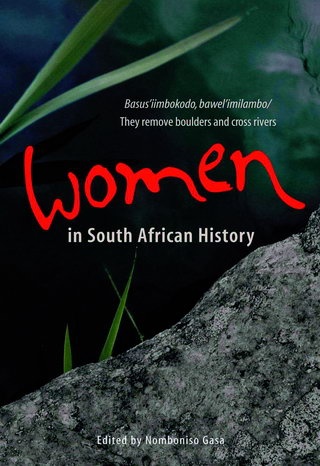
A review by Sokari Ekine, The New Internationalist
Women in South African history traces the lives of South African women from the pre-colonial, pre-union period (mid-18th century) to the post-apartheid beginnings and present day South Africa. It is written in four thematic parts: Women in the pre-colonial and pre-union periods; Women in early to mid-20th century South Africa; War: armed and mass struggle as gendered experiences; The 1990s and beyond: new identities, new victories, new struggles.
Monday, 1 August 2011
Frontiers: The Epic of South Africa's Creation and the Tragedy of the Xhosa People

From Publishers Weekly
This book masterfully reinterprets the founding era of South Africa,
especially the 19th century, to emphasize not the Afrikaners but the
conflict between British colonials and the indigenous Xhosa people.
Drawing on virtually forgotten government records and vivifying
little-known people, Mostert ( Supership ) has done for South Africa
what Robert Hughes did for Australia in The Fatal Shore . Mostert places
South Africa in the framework, both geographical and moral, of world
colonial expansion; Britain's Cape Colony, site of an experiment in
political liberalism, illustrates the era's tension "between high-minded
conscience and self-interest."
Saturday, 30 July 2011
Govan Mbeki: The Peasants’ Revolt
 |
| South Africa: The Peasant's Revolt |
Preface by Ruth First
Sunday, 17 July 2011
A Proper Degree of Terror: John Graham and the Cape's Eastern Frontier

A non-academic but respected account of the 'proper degree of terror' employed by John Graham in his expulsion of the Xhosa people from the Zuurveld. Essential reading to understand some of the colonial history of Grahamstown.
Subscribe to:
Posts (Atom)